
CNAP Explained: How KYC-Verified Caller Names Will Appear on Calls
CNAP will show KYC-verified caller names on incoming calls from 1 November 2026. Learn how it works, why it matters, and how it differs from Truecaller.
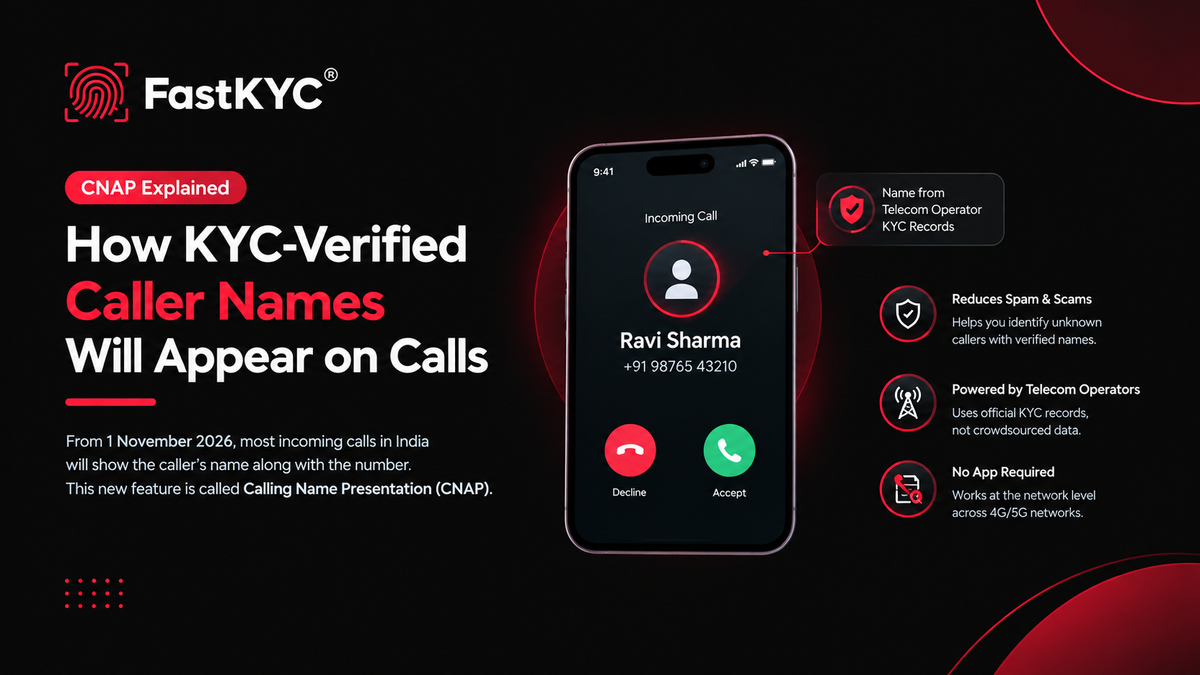
From 1 November 2026, most incoming calls in India will show the caller’s name along with the number. This new feature is called Calling Name Presentation (CNAP).
CNAP is designed to reduce spam and scam calls by displaying the name registered with the telecom operator at the time of SIM issuance - a name that is linked to the customer’s KYC documents.
What is CNAP?
CNAP (Calling Name Presentation) is a network-level service that displays the caller’s registered name on the recipient’s phone screen during an incoming call.
Unlike third-party apps, CNAP does not rely on crowdsourced data. It pulls the name directly from the telecom operator’s subscriber records, which are created using official KYC documents such as Aadhaar.
How CNAP Works
When someone calls you:
- Your network receives the call.
- If the number is saved in your contacts, the saved name is shown.
- If the number is not saved, the network fetches the name registered with the caller’s telecom operator.
- That name is displayed on your screen along with the phone number.
For international calls, the screen will simply show “International Call”.
When is CNAP starting?
The Department of Telecommunications has directed all telecom operators to introduce CNAP across their service areas from 1 November 2026.
The initial rollout covers 4G and higher generation networks (including 5G). Support for 2G, 3G and landline networks will be considered later.
Why CNAP Matters
The main goal of CNAP is to make it harder for scammers to hide behind unknown numbers.
By showing a verified name linked to the SIM’s KYC record, users can make a more informed decision before answering a call from an unknown number.
It is especially useful against impersonation calls that claim to be from banks, government departments or delivery services.
CNAP is built into the telecom network itself, so users do not need to install any extra app.
Important Points to Note
- If a number is already saved in your phone, the saved contact name will still take priority.
- Users who have enabled Calling Line Identification Restriction (CLIR) may not have their name displayed.
- Telecom operators must set up a grievance redressal system for CNAP-related complaints.
- The name shown is based on the KYC details submitted when the SIM was issued or last updated.
Privacy and Accuracy Concerns
Some users have raised questions about privacy and the accuracy of existing KYC records.
If a name is incorrect or outdated, the subscriber will need to update their details with the telecom operator. Operators are required to verify any name change against original documents before displaying it.
Why This Matters for Verification Platforms
CNAP is another example of how KYC data is being used beyond traditional onboarding. Accurate identity records created at the time of SIM issuance are now powering real-time caller identification for millions of users.
As more services rely on verified identity data, the quality and consistency of KYC records become even more important.
- CNAP
- Caller Name
- Presentation
- KYC
- Telecom