

What Is an LEI? Understanding Legal Entity Identifiers and Verification
Discover what an LEI is, how its structure works, how to search GLEIF records, and how LEI verification helps businesses identify legal entities.
Harsine K USoftware Engineer
On this page 8 sections
Businesses operating across financial markets and international transactions need reliable ways to identify the organizations they deal with. Company names and local registration numbers may not always be sufficient when entities operate across different countries and regulatory systems.
A Legal Entity Identifier (LEI) provides a globally standardized identity for legal entities. It helps identify organizations participating in financial transactions and supports transparency, regulatory reporting, and corporate verification.
What Is a Legal Entity Identifier ?
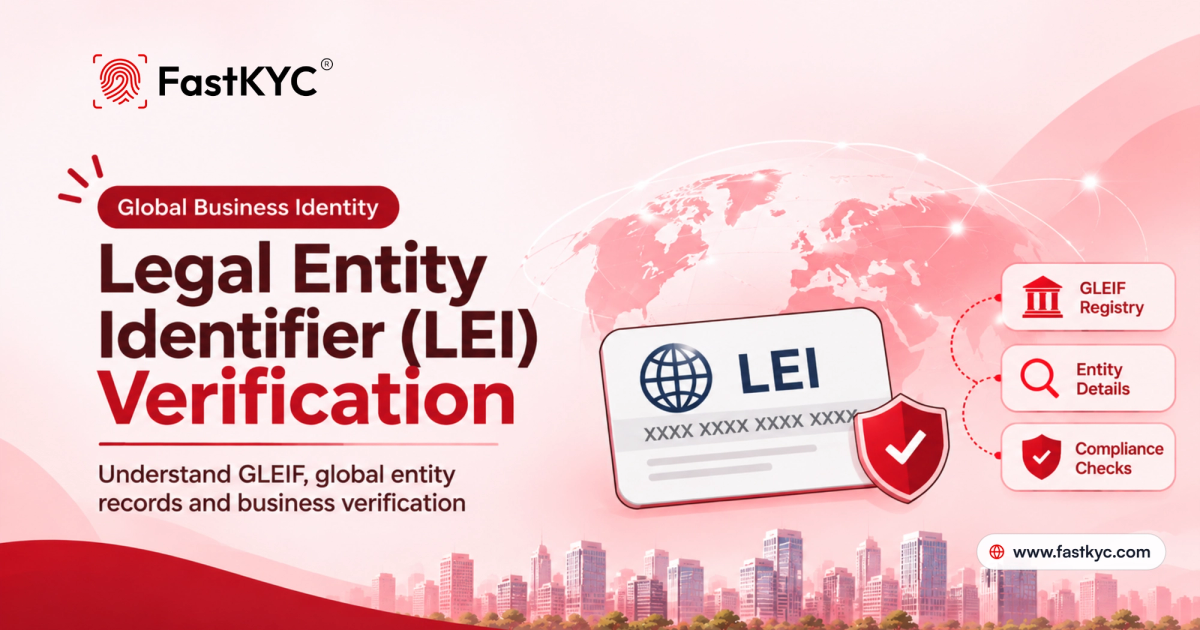
A Legal Entity Identifier (LEI) is a unique 20-character alphanumeric code assigned to a legal entity. It provides a standardized identity that can be recognized across financial markets and jurisdictions.
The LEI system was developed following the 2008 financial crisis to improve transparency in global financial markets and make it easier to identify entities involved in financial transactions.
Each LEI is linked to a record containing information about the entity, such as its official name, registered address, jurisdiction, and registration details.
The Global Legal Entity Identifier Foundation (GLEIF) oversees the Global LEI System and maintains the Global LEI Index, which allows users to access LEI records worldwide.
What Is GLEIF?
The Global Legal Entity Identifier Foundation (GLEIF) is the organization responsible for overseeing the Global LEI System. It supports the consistent and reliable use of LEIs worldwide and maintains the Global LEI Index, a publicly accessible database of legal entity records.
GLEIF does not directly issue every LEI. LEIs are issued and maintained through authorized organizations known as Local Operating Units (LOUs), which register entities and maintain their associated reference information.
The GLEIF database allows businesses, financial institutions, and other users to search for LEIs, verify entity details, and access registration information through its official search portal.
Who Needs an LEI?
An LEI is generally required for entities participating in certain regulated financial activities and transactions where legal entity identification is mandated.
These may include:
- Financial institutions and banks
- Investment firms and funds
- Entities participating in securities and derivatives markets
- Organizations subject to regulatory reporting requirements
- Businesses involved in certain cross-border financial transactions
LEI requirements vary based on the jurisdiction and nature of the activity. It is not a mandatory identifier for every registered business.
Structure of an LEI Number
An LEI is structured into different sections, each representing a specific part of the identifier. The structure helps standardize entity identification across the global financial system.
- Characters 1–4 – Reserved Characters: These are reserved for future use and are currently set to
0000. - Characters 5–6 – Issuer Prefix: Identifies the issuing organization within the Global LEI System.
- Characters 7–18 – Entity Identifier: A unique identifier assigned to the legal entity.
- Characters 19–20 – Check Digits: Used to validate the LEI and detect errors in the identifier.
This standardized structure ensures that LEIs follow a consistent format and can be validated across different systems.
How to Search for an LEI Online?
The official GLEIF LEI Search portal allows users to search the Global LEI Index and access publicly available entity records.
Follow these steps to search for an LEI:
1. Visit the official GLEIF LEI Search Portal: https://search.gleif.org/#/search/simpleSearch
2. Enter the LEI number or entity name in the search field.
3. Submit the search to retrieve matching entities.
4. Select the relevant entity from the search results.
5. Review its LEI record, registration details, status, and associated information.
The portal also allows users to explore entity records and access additional information, including ownership relationships where available.
LEI Verification API by FastKYC
FastKYC's LEI Verification API allows businesses to retrieve legal entity information programmatically without manually searching the registry for every request.
The API returns structured entity information that can be integrated into business applications, onboarding systems, and compliance workflows.
The response includes the following details:
- Entity Details: LEI number, company name, jurisdiction, legal form, legal category, and entity creation date.
- Registration Details: Entity registration number, managing LOU, initial registration date, and registration status.
- LEI Status and Renewal: Current LEI status, last updated date, next renewal date, expiration details, and successor LEI information, where applicable.
- Address Details: Registered legal address and headquarters address.
- Data Validation: Corroboration level recorded for the entity's reference data.
These details allow businesses to retrieve structured entity information and incorporate it into their existing verification, onboarding, and compliance workflows.
Use Cases of LEI Verification
1. Corporate Onboarding
Retrieve entity information during corporate onboarding to support organization identification and verification.
2. Counterparty Verification
Identify organizations involved in financial transactions and review their associated entity records.
3. Compliance Processes
Use LEI details as part of regulatory reporting, compliance checks, and business verification workflows where applicable.
4. Vendor and Partner Verification
Retrieve legal entity information when evaluating vendors, suppliers, and business partners.
5. Cross-Border Transactions
Use a standardized global identifier to identify organizations operating across different jurisdictions.
LEI Registration and Renewal
An LEI must be maintained to ensure that the associated reference information remains accurate. LEI records generally require annual renewal, during which the entity's information is reviewed and updated if necessary.
When checking an LEI, businesses should review its registration status and renewal details instead of only confirming that the identifier exists.
A Lapsed LEI indicates that the record has not been renewed within the required period. It does not necessarily mean that the organization has closed or ceased operations.
Keeping LEI records renewed helps maintain the reliability of information used for entity verification and compliance processes.
- LEI Search
- Financial Compliance
- Entity Verification