


RBI’s New KYC Rules & Digital Arrest: What Banks Must Prepare by Dec 31
Supreme Court is examining RBI’s new KYC Amendment Directions. Banks may face higher accountability for mule accounts and digital arrest frauds.
Krithick TSoftware Engineer
On this page 5 sections
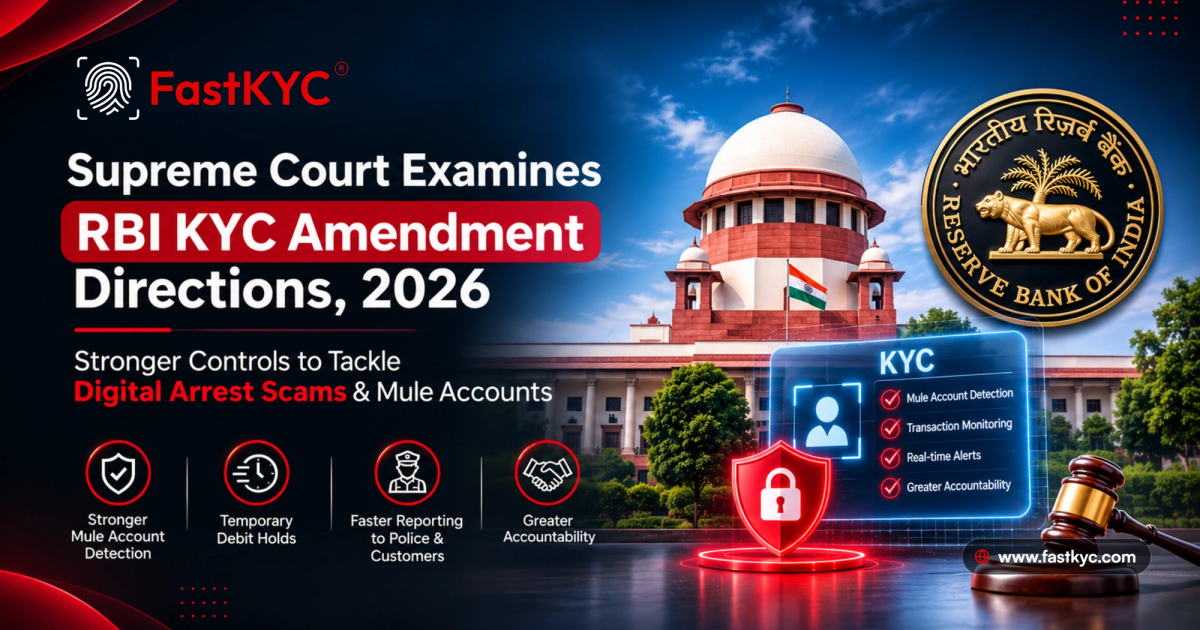
The Supreme Court is closely examining the Reserve Bank of India’s proposed KYC Amendment Directions, 2026. These rules are expected to be notified by the end of November and become operational by 31 December 2026.
The focus is clear: reduce digital arrest scams, detect mule accounts faster, and make banks more accountable when customers lose money to cyber fraud.
Why the Supreme Court Got Involved
Digital arrest scams continue to cause heavy losses. Even though the number of such cases has dropped, victims have still lost hundreds of crores this year.
The Court has observed that banks need better systems to:
- Flag unusual transactions quickly
- Identify suspected mule accounts
- Alert customers and police in real time
- Take responsibility when due diligence is weak
The Attorney General has informed the Court that standard operating procedures and draft regulations are being finalised.
What the New RBI KYC Directions Are Expected to Cover
While the final text is still being shaped, the key expectations emerging from the discussions are:
1. Stronger Mule Account Detection
Banks will need better tools and processes to identify accounts being used to receive and move fraud money.
2. Temporary Debit Holds
Unusual transactions (especially those that do not match the customer’s profile) may be put on temporary hold for investigation.
3. Faster Reporting to Police and Customers
Banks are expected to share alerts with neighbouring police stations and inform customers when suspicious activity is detected.
4. Greater Accountability
The Court has indicated that banks should compensate victims in cases where they failed to exercise proper due diligence.
Why This Matters for Banks, NBFCs and Fintechs
The upcoming directions will raise the bar on:
- Continuous monitoring after onboarding
- Transaction pattern analysis
- Name matching and identity consistency checks
- Real-time risk scoring of accounts
- Coordination with law enforcement
Simply completing KYC at the time of account opening will no longer be enough. Ongoing monitoring and rapid response will become critical.
Practical Steps Lenders Should Take Now
- Review current mule account detection rules
- Strengthen name match and identity consistency checks during onboarding
- Ensure transaction monitoring systems can flag unusual patterns quickly
- Prepare clear escalation processes for suspected fraud
- Train teams on the expected new timelines and liability expectations
- Keep audit trails ready for regulatory scrutiny
Strengthen Your First Line of Defence
Accurate identity verification at onboarding remains the foundation. Combine it with strong monitoring to stay ahead of the new expectations.
- Real-time PAN, Aadhaar, face match and liveness checks
- Bank account verification
- Built for lending and compliance workflows
- RBI KYC
- Bank Liability
- Digital Arrest
- Mule Accounts
- Cyber Fraud