

RBI Trusted Person Mechanism for High-Value Transfers Explained
RBI’s new draft proposes a Trusted Person Mechanism for high-value electronic transfers, Stop Switch and stronger customer controls to reduce digital payment fraud.
Krithick TSoftware Engineer
On this page 6 sections
On 23 November 2026, the Reserve Bank of India released draft directions aimed at giving customers stronger control over digital payments and reducing fraud. One of the key proposals is the Trusted Person Mechanism (TPM).
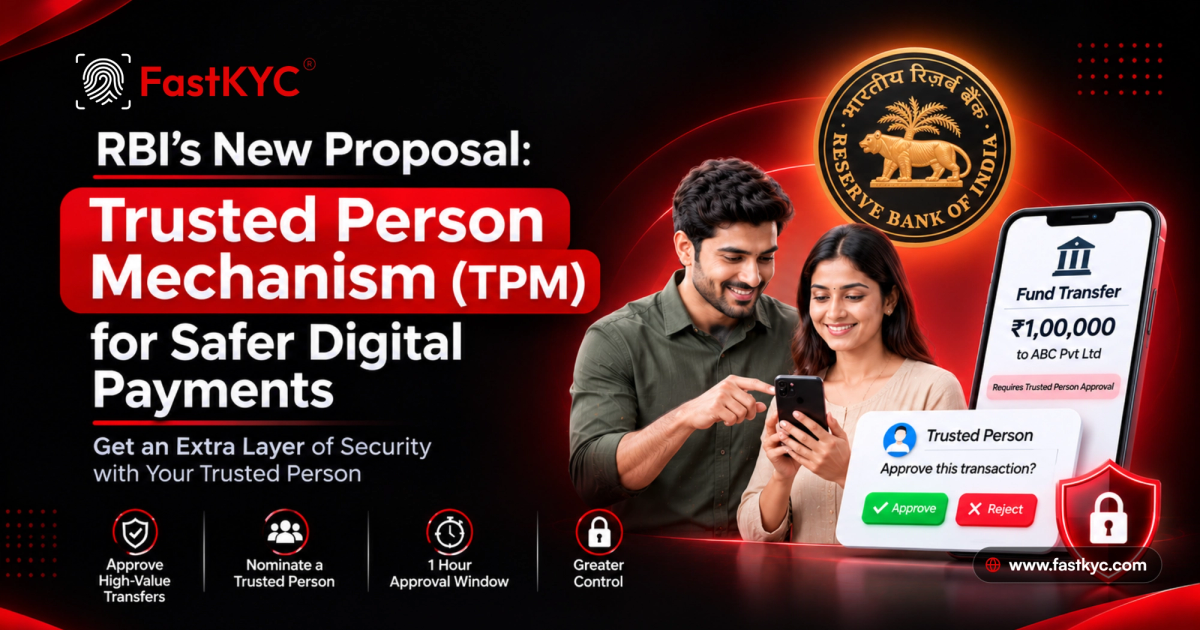
Under this facility, an account holder can nominate another adult who must approve electronic fund transfers above a threshold set by the customer.
What is the Trusted Person Mechanism?
The Trusted Person Mechanism is a voluntary extra layer of authentication. Customers can register an adult (18 years or older) as their trusted person. Once activated, any electronic fund transfer that exceeds the customer-set threshold will require the trusted person’s approval.
Key points:
- The trusted person receives details of the amount, beneficiary and any narration entered by the customer.
- They get a one-hour window to approve or reject the transaction.
- If they reject it or do not respond within one hour, the transfer is declined.
- The trusted person has no access to the account balance, deposits or other details, and carries no financial liability.
Registration requires the trusted person’s name, mobile number (different from the customer’s), email and an officially valid identity document. Banks must verify these details. A 24-hour cooling-off period applies before the mechanism becomes active.
What is excluded?
The mechanism will not apply to:
- UPI transfers
- Merchant payments (any channel)
- Recurring payments through standing instructions, e-mandates or NACH
It covers other electronic fund transfers made through physical or digital channels, subject to the threshold set by the customer.
Other major proposals in the same draft
Along with the Trusted Person Mechanism, RBI has proposed several related safeguards:
Stop Switch
A one-tap facility that lets customers immediately block all future customer-initiated outward debits from their account. Incoming credits remain unaffected.
Channel and limit controls
Customers will be able to:
- Disable or re-enable individual payment channels
- Set per-transaction, per-beneficiary and daily limits
- Schedule time windows during which electronic payments remain disabled
Default-off channels
Digital payment channels are proposed to be disabled by default at the time of account onboarding (with certain card exceptions).
Expanded bank liability
RBI has widened the definition of “negligence by a bank”. This change is proposed to take effect from 1 January 2027.
Timeline
- Public comments are open until mid-December 2026.
- The Trusted Person Mechanism, Stop Switch and channel controls are proposed to become mandatory from 1 July 2027 (or earlier if a bank chooses to implement them sooner).
- The expanded definition of bank negligence is proposed from 1 January 2027.
Why this matters for banks and fintechs
These measures shift more control to customers while increasing the operational and compliance expectations on regulated entities. Banks and payment platforms will need to:
- Build registration and verification flows for trusted persons
- Create real-time notification and approval channels
- Maintain clear audit logs
- Update customer communication and consent processes
For platforms already handling KYC, identity verification and consent management, integrating these controls will be a natural extension of existing compliance infrastructure.
Looking ahead
The draft reflects RBI’s continued focus on reducing digital payment fraud while giving customers practical tools to protect their accounts. Once finalised, banks and fintechs will need to update onboarding, authentication and transaction flows accordingly.
If you are building or upgrading payment and compliance systems, these new customer-control features will need careful design around consent, identity verification and real-time notifications.
- RBI
- Trusted Person
- Digital Payments
- Fraud Prevention
- Banking Compliance